1. GS HF VIP vs. VIP Short: Crowding Stress
2. Heavy AI Issuance Creates a Contrarian Credit Opportunity
3. ChiNext: the tape and the model have parted ways

Heading 1
Heading 2
Heading 3
Heading 4
Heading 5
Heading 6
Lorem ipsum dolor sit amet, consectetur adipiscing elit, sed do eiusmod tempor incididunt ut labore et dolore magna aliqua. Ut enim ad minim veniam, quis nostrud exercitation ullamco laboris nisi ut aliquip ex ea commodo consequat. Duis aute irure dolor in reprehenderit in voluptate velit esse cillum dolore eu fugiat nulla pariatur.
Block quote
Ordered list
- Item 1
- Item 2
- Item 3
Unordered list
- Item A
- Item B
- Item C
Bold text
Emphasis
Superscript
Subscript
1. GS HF VIP vs. VIP Short: Crowding Stress
Goldman’s HF VIP vs. VIP Short basket is a crude crowding barometer: the most popular
hedge-fund longs versus the most popular shorts.
Sharp underperformance into July has pushed the pair to 0.9σ (1.8%) below Qi model
value, near the lower end of its recent range. The close relationship between spot
performance and the valuation gap suggests the FVG has had useful signal power. It is
not yet as stretched as mid-June, but it is moving back in that direction.
The key macro driver is US real yields. VIP longs tend to be higher-multiple, longerduration
stocks, making them more sensitive to rising discount rates. Elevated real
yields therefore pressure valuations and can accelerate crowded-long unwinds as
hedge funds cut risk.
A benign fall in real yields - driven by softer inflation and Fed relief rather than a growth
shock - would be the clearest catalyst for a rebound.
Bottom line: crowded longs have taken another hit. The pair is becoming tactically
interesting, but a sustained recovery likely needs real-yield relief.

2. Heavy AI Issuance Creates a Contrarian Credit Opportunity
Heavy bond issuance from hyperscalers funding AI capex has become the dominant
narrative in US investment grade credit, pushing spreads wider and weighing on LQD.
Qi agrees supply matters. But macro tells a different story - higher rate volatility has
been offset by fewer expected Fed hikes and a steeper yield curve, leaving macro fair
value anchored around 108 for the past three months.
LQD, iShares ETF tracking US IG credit, has fallen over 2% hit by deteriorating credit
(wider spreads) & duration (higher UST yields).
The divergence leaves LQD trading 1.4σ (1%) cheap to macro fair value. With model
confidence at 75%, Qi suggests the supply-driven sell-off has overshot macro
conditions.

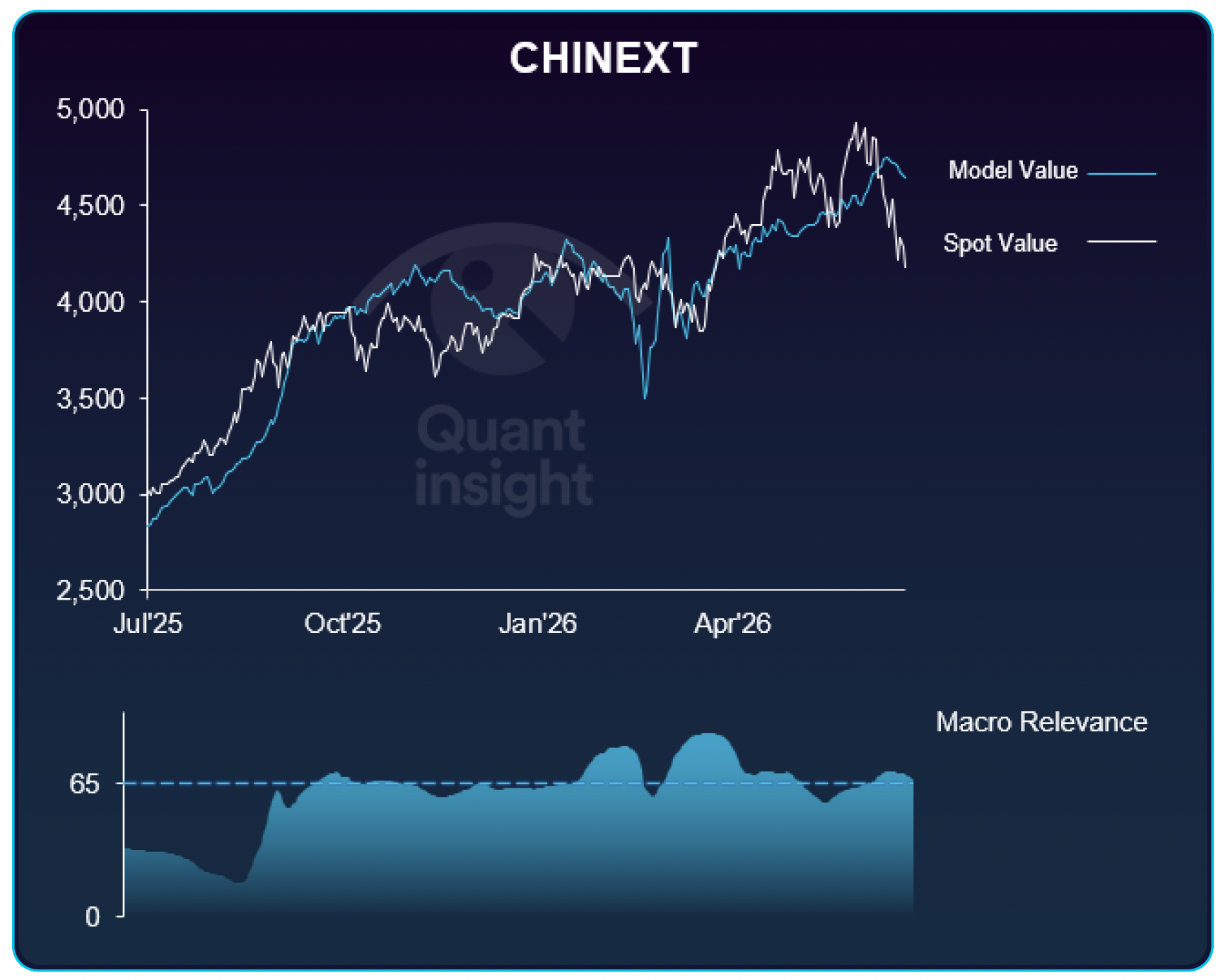
3. ChiNext: the tape and the model have parted ways
Over the past month spot fell close to 12% as the global AI derating and softer Chinese
data dragged the index down. Qi’s model value did the opposite, rising almost 3%.
That leaves a Fair Value Gap of -1.44σ (-11.21%), with model confidence at 67%: macro
is firmly back in charge.
The divergence is the story. The drawdown was sentiment-led, yet the drivers Qi’s
model weighs moved the other way. Rising risk aversion and softer inflation did weigh
on fair value, but firmer credit conditions and a supportive real-rate and metals
backdrop more than offset them, lifting the model even as the tape fell.
The result is a rare dislocation: an index the model reads as materially cheap, driven
there by a shock its macro anchors have not registered. Risk-reward tilts to the long
side.

Related Articles
.jpg)
1. Treasuries: An Equity Hedge, Not a Bond Hedge
2. Eurozone Banks: Sell-off Running Ahead of Macro?
3. Gold vs. TLT: Wrong Timing to Chase Debasement
.jpg)
1. Healthcare: Defensive Premium Overdone?
2. Utilities: Bond Sell-Off Casualty
3. Communications: The Leader Looks Stretched
.jpg)
1. Homebuilders Oversold
2. Bond Bears Pick Your Curve
3. Brazil Outruns Its Macro

1. Bullish Divergence Patterns in US Equities
2. XKL Bad News Is Getting Priced In
3. Looking to Fade the Yen? AUDJPY