1. US Metals & Mining
2. China vs. India
3. NZDCHF

Heading 1
Heading 2
Heading 3
Heading 4
Heading 5
Heading 6
Lorem ipsum dolor sit amet, consectetur adipiscing elit, sed do eiusmod tempor incididunt ut labore et dolore magna aliqua. Ut enim ad minim veniam, quis nostrud exercitation ullamco laboris nisi ut aliquip ex ea commodo consequat. Duis aute irure dolor in reprehenderit in voluptate velit esse cillum dolore eu fugiat nulla pariatur.
Block quote
Ordered list
- Item 1
- Item 2
- Item 3
Unordered list
- Item A
- Item B
- Item C
Bold text
Emphasis
Superscript
Subscript
1. US Metals & Mining
Metals and mining has been hit hard, and XME now screens 1.12σ (11.6%) cheap against a
Qi model value of 112.66. Macro is firmly in charge, with model confidence at 74% and
rising after briefly dropping out of regime in April. The big picture is reasserting itself
just as the sector looks washed out.
The catch is that fair value itself is eroding. Qi model value has fallen over 5% in the past
month, dragged by rising real rates, hawkish central bank policy expectations and a
firmer dollar, with a softer metals complex adding to the pressure and only inflation
expectations offering support. That is why this is not yet a confirmed signal: the gap is
cheap, but against a falling target.
The setup does have form, though. Buying XME at 1σ cheap with macro in regime has
historically closed the gap 75% of the time.

2. China vs. India
After years of strong performance, Indian equities have endured a tough run. Rich
valuations bumped into a sense that India’s large IT services sector was among the
most vulnerable to AI. The result was international investors trimmed exposure.
South Korea & Taiwan were clear beneficiaries but, for many allocators, the choice is
between the two emerging superpowers – China & India.
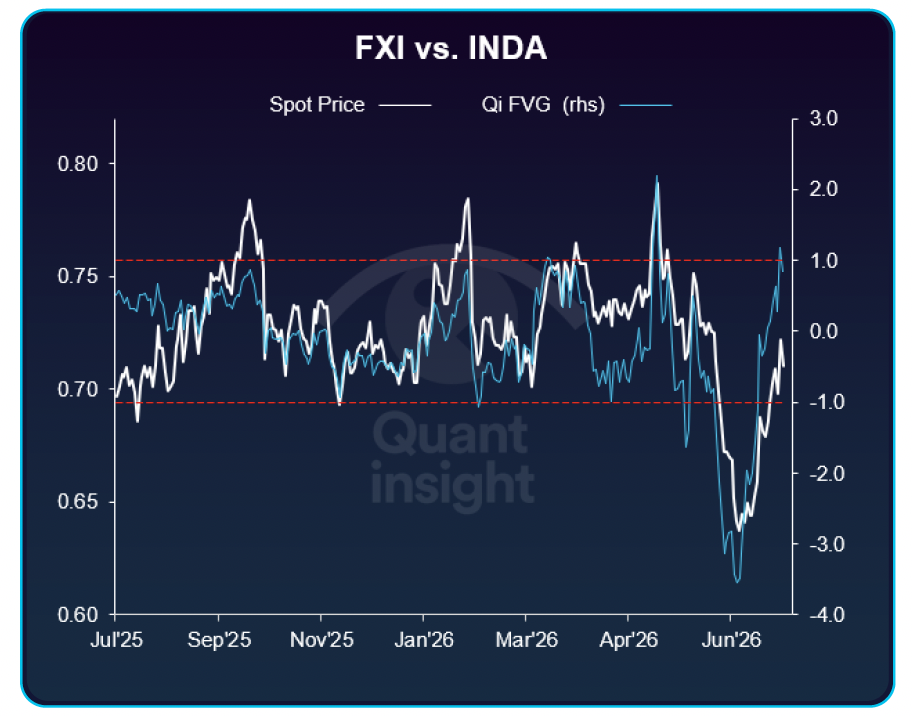
Qi’s model for the RV between China (FXI) & India (INDA) has just moved back into
regime (67% model confidence) & an interesting divergence is starting to emerge.
FXI has outperformed strongly in July, but Qi model value is hovering near recent lows.
The result is China screens as 3.3% rich to India. That triggered a +1 std dev Fair Value
Gap – enough for a new bearish signal. We also note strong correlation between spot &
Qi FVG; suggesting the mean reversion process occurs via the market re-pricing to
macro.
So, if the AI trade is mature & set to pivot again, we have a situation where India has derated,
Chinese tech is having a Moonshot moment &, relative to macro, valuations are
starting to look stretched.
3. NZDCHF
The RBNZ is arguably the most hawkish G10 central bank right now – it’s already
resumed hiking & has a clear policy bias towards fighting inflation & additional rate
increases.
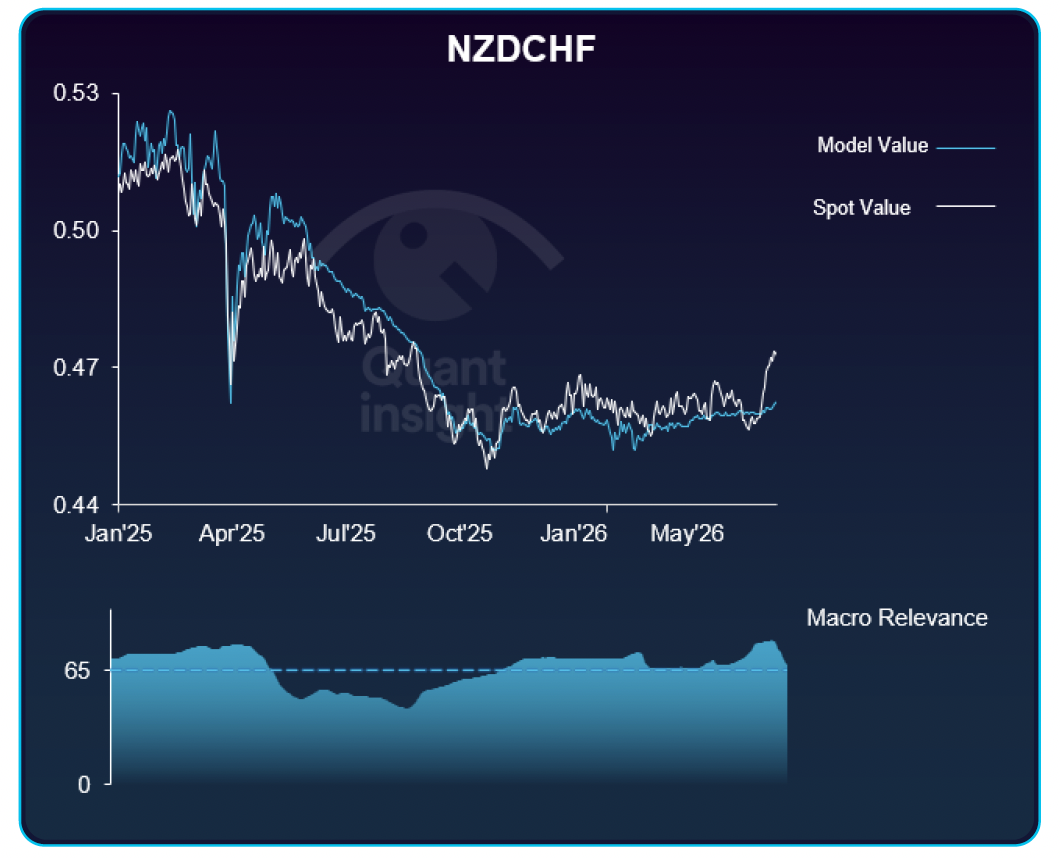
On Qi, NZDCHF is the clear outlier amongst Kiwi fx crosses sitting 2.3 sigma (2.0%) rich
to macro fair value. Bond market shifts matter – interest rate differentials & relative
yield curve shape are the two biggest drivers. RBNZ rate hikes & subsequent bear
flattening of the curve are lifting Qi’s macro fair value.
But the market has overshot & is in rarified territory. Qi’s FVG has only been north of 2
sigma & in a macro regime (RSq > 65%) twice since 2009. Both times the gap closed
by the market catching down to macro fundamentals.
In short, such an extended FVG creates a rare & efficient entry level for anyone thinking
today’s inflation narrative soon shifts to fears of disinflation.

Related Articles
.jpg)
1. Treasuries: An Equity Hedge, Not a Bond Hedge
2. Eurozone Banks: Sell-off Running Ahead of Macro?
3. Gold vs. TLT: Wrong Timing to Chase Debasement
.jpg)
1. Healthcare: Defensive Premium Overdone?
2. Utilities: Bond Sell-Off Casualty
3. Communications: The Leader Looks Stretched
.jpg)
1. Homebuilders Oversold
2. Bond Bears Pick Your Curve
3. Brazil Outruns Its Macro

1. Bullish Divergence Patterns in US Equities
2. XKL Bad News Is Getting Priced In
3. Looking to Fade the Yen? AUDJPY